Balance or...


Balance or: How I Learned to Stop Late Braking and Love Driving the Corner
We challenge newer high performance drivers to brake later: carry speed longer, then use our very capable BMW brakes harder closer to when we need to slow down. It can be intimidating, so it takes some practice to get comfortable with. But it makes intuitive sense as the goal: the later we brake, the longer we get to carry speed before that.
So naturally, as our skills continue to progress, we want to keep working to brake even later, right? It worked before, so surely as long as we keep making the corner, this seems to follow.
Maybe not so much. Racing legend Mario Andretti is often quoted calling exactly this mistake out: "It's amazing how many drivers, even at the Formula 1 level, think that the brakes are for slowing the car down."
Learning the lesson
Much earlier in my driving career, I had the privilege of experiencing this from a pro driver first-hand (Thanks, Case!).
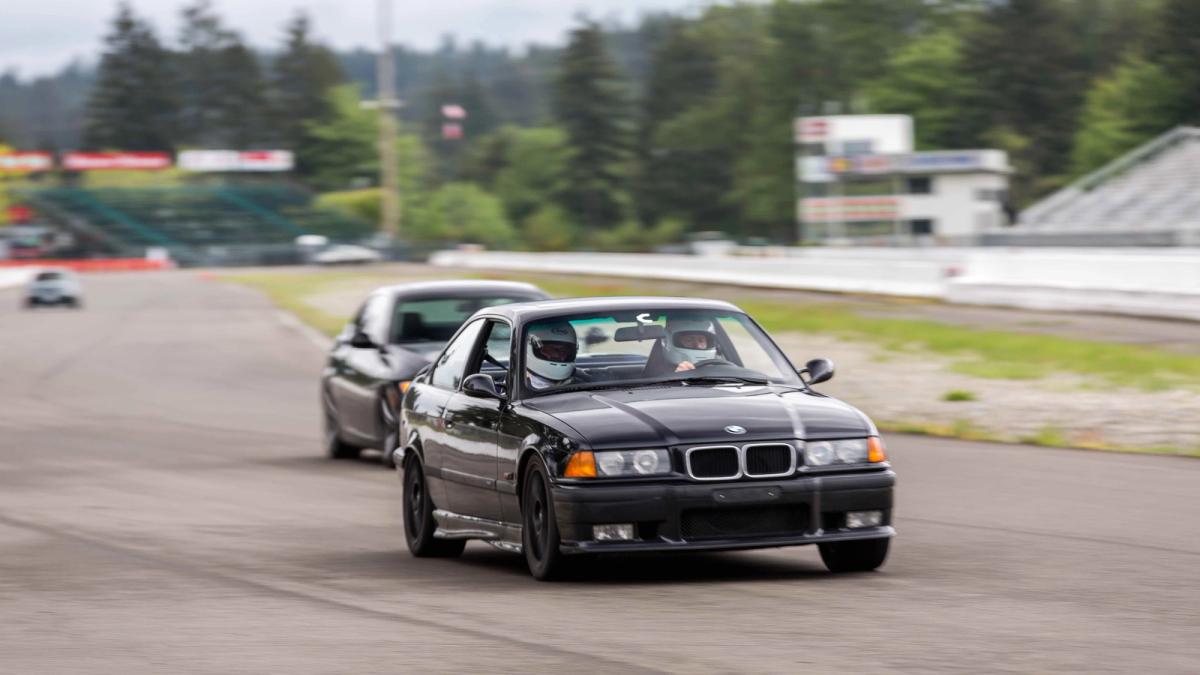
I was already driving pretty quickly on track, so he demonstrated what really quick was: driving effectively identical cars, he started behind me, braked earlier than me, passed me off line under braking, rejoined the line in front of me still carrying more speed mid corner, and got a faster exit (so good that he didn't even track all the way out). All the while I was about at the limits, having to be extra patient with power on corner exits.
He also demonstrated this from in front, clearly braking earlier than me, yet pulling away from me through every step of the corner including the braking zone. And I checked the data, he wasn't cheating it by just lighting up his brake lights, he was consistently slowing the car from the moment he touched the brakes.
So how was he driving every phase of every corner faster than me when I was at the limits and he was braking earlier?
Late Braking
I was "late braking" approaching every corner: trying to get every last bit of acceleration on the straights before fully utilizing my brakes for straight-line slowing. And I knew I wasn't braking too late because I was consistently making the corners without issue, carrying decent speed through them, feeling the limits... or at least that was my reasoning.
What I didn't realize is what I was sacrificing.
Our brakes are designed to take full advantage of the load transferred to our front suspension under heavy braking, that's why our front brakes are bigger. So my heavy braking was optimal for slowing my car (so long as the tires maintained grip).
But cornering is another story. Just like we need both our left and right tires working evenly for optimal braking, we need both our front and rear tires working evenly for optimal cornering.
My unintentional sacrifice was not leaving a margin in my braking for a smooth transition to this kind of balanced cornering. This is what Mario Andretti was talking about: I was one of those drivers thinking brake usage was about slowing my car down.
A suspension is a set of springs, it doesn't transition from heavily loaded on the front to balanced for cornering instantly. And worse, if we try to rush this transition, the springs rebound too much, leaving the suspension even less balanced. Or we can rush back to power to try to force the suspension to settle, but now we're using some of our traction budget for power, leaving us with less grip for cornering.
We just can't win with late braking, we're always sacrificing something. This was the key lesson I had to learn.
Using All The Tires
To find the balance to fully use all my tires for cornering, I had to learn to sacrifice time somewhere else: time to trail off the brakes before turn-in.
The initial application of the brake can still be quick, hard, and fairly late, though how hard depends on the corner. But the trail-off happens before the turn-in, so it must start early enough to have time to rebalance the suspension load.
(Even if we're trail-braking, a more advanced technique, we're still aiming to be mostly off the brake and mostly equally balanced by the time we're in the corner. I'm talking at most 5% brake pressure to make small advanced balance adjustments. Anything more is typically at best, under driving, or at worst leads to spins from imbalance.)
Smoothness
And critically, maximizing grip requires smooth inputs, to minimize resonating rebounding of the suspension. In particular, a smooth brake release. This is how we get our car to "take a set", where it has the maximum grip it can have holding a fixed suspension load. Smooth inputs also take time.
(There are some upgrades that may improve the ease of this, but it still requires driver skill. We can't avoid physics, so driver skill always comes first.)
Early Braking
The pro was showing me how to do this first hand: brake earlier and lighter! Especially when struggling to get your braking perfect, but really always.
It's not about slowing down earlier, it's about slowing down smoother and more balanced. Especially for longer sweeping corners.
He was braking earlier so his inputs could be even smoother than mine. And he was braking lighter so he could still carry more speed than me even while slowing the car. And these both made him more balanced in the corner so all his tires were working more fully to help him corner. And this led him to be better balanced for corner exit, too, so he could smoothly get to power earlier and better than me, getting a better run down the next straight.
And he said this is how he drives qualifying laps for his races, too! Braking later both makes the braking zone harder to judge well, leading to more mistakes, and imbalances the car. It has almost no benefit except to feel more exciting, even when done by a pro fighting for those last tenths of a second, as my earlier article showed.
Plus, early braking is safer. Imagine we misjudge a braking zone and brake too late. Or maybe our brakes suddenly don't work as well as we expect. If we're braking at the last possible moment, physics says that's it and we're about to meet the run-off. Whereas if we're braking a bit earlier and lighter, if it goes wrong, we have time and margin to adjust. It won't make for an optimal corner, but we can smoothly minimize the mistake.
Putting it into Practice
Of course theory is great, but we're all still going to tend to make this mistake. It's human nature, like I said: braking feels like the opposite of going fast so we try to put it off. Our conscious minds may know better but our subconscious minds need more hands-on practice to internalize lessons like this.
Our club's local Car Control Clinics' braking exercises are great for focused practice while our High Performance Drivers Education events are great for putting these skills together on a track, with experienced instructors riding in your right seat to help you dial in this skill and many more. These events aren't about racing or pushing hard, they're about practicing our skills and enjoying our cars.
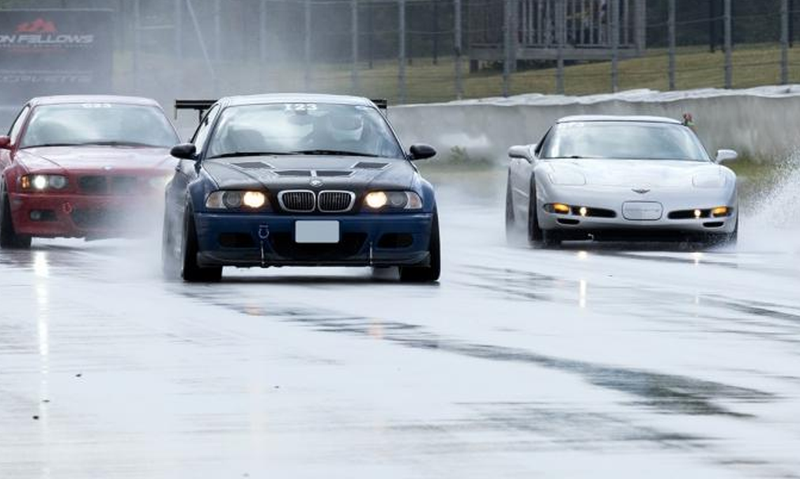
And in particular, attend these events in the rain when possible. Rain driving is the best way to practice balance because the lower and less forgiving traction exaggerates the problems with imbalance. Plus the lower speeds make it easier to learn from.
I also highly encourage keeping a notepad of things to remember. Otherwise, it's too easy to get in the zone driving and fall back to old tempting habits. Keep it short, and keep it updated as you progress. The goal is to always review it before and after each session of each high performance driving event you do. Having those reminders in our faces is the best way to keep them top of mind, so we don't forget to remember. Perfect practice makes perfect.