Keeping it on the Road


It’s simple - the steering wheel turns the car, the accelerator pedal speeds the car up, and the brake pedal slows the car down. We call these "controls" because they allow us to control the car.
…except when they don't.
The reality is we can only control our tires. Physics is what allows our tires to grip the ground. And that grip has limits.
As responsible drivers, we generally try to stay well under these limits. But in unexpected situations, sometimes the limits sneak up on us. And when we exceed them, physics ceases to strictly follow our tires' "suggestions" anymore.
Fortunately, our BMWs, and most modern cars, are equipped with excellent safety systems to help mitigate the consequences of exceeding limits. As our BMW manuals note with lawyery prose: these systems cannot defy the laws of physics. But the brilliant engineers at BMW do get close. Let’s delve into how they do it.
Braking
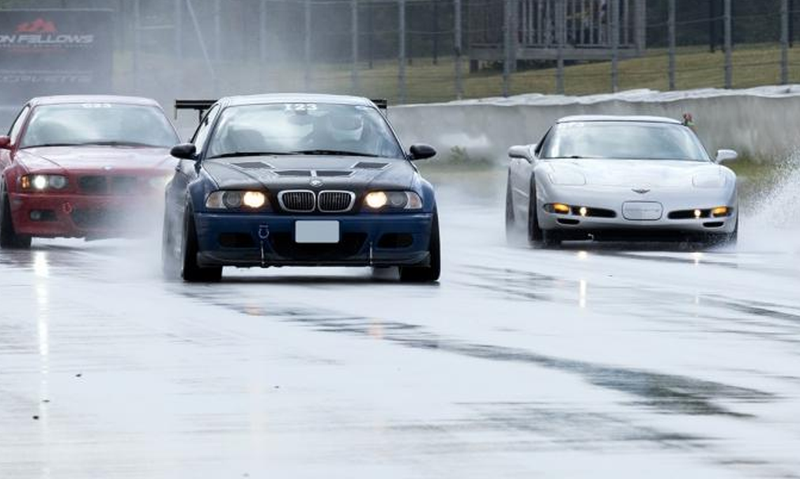
Our BMWs' brakes are very powerful. They can stop our wheels very quickly. Our tires, on the other hand, don't have enough grip to stop our cars as quickly. Especially in inclement conditions like rain, snow, or ice. When our brakes overpower the grip of our tires, we call this "lock-up" because our tires stop rolling and start sliding. The car stops being a car and starts being a hockey puck: sliding in whatever direction inertia carries it, no matter what we do with the controls, until friction eventually stops it.
Drivers used to be taught to "pump the brakes" in an emergency stop to prevent lock-up, especially on snow and ice. The idea being as long as the wheels don't stay locked-up, some control is maintained. This sort of works when done right, but was a lot to ask of a driver in a panic situation, was easy to get wrong, and didn't slow the car as effectively.
Luckily, in the last few decades, Antilock Braking Systems (ABS) came along. ABS eliminates all of this complexity, preventing lock-up far better than we can. Just quickly push the brake pedal as hard as possible and hold it, and the car's ABS system will do all the work for you, as optimally as possible. It can adjust the brakes dozens of times per second, even independently on each wheel for varying grip. You may feel uncomfortable as the pedal and car pulses and shudders a bit, but keep holding full pressure on that pedal, that's just ABS doing its job.
ABS keeps our tires rolling just enough to slow the car optimally, plus allows us to still steer. Though be aware physics still applies: the car will stop most effectively in a straight line, so only turn during an ABS stop if absolutely necessary.
Accelerating
Our BMWs have good horsepower, too. And even when we're gentle or have less horsepower, adverse conditions like rain or snow still lower our tires' limits putting power down. When our engines exceed our tires' ability to grip the road, we get wheelspin, as that power stops powering acceleration and starts powering spinning our tires faster than the road, making heat and smoke, wearing our tires fast, and eliminating lateral grip in the process (Which can sometimes be fun in a safe setting! Ed.).
Traditionally, it was up to the driver to modulate the throttle to stay below these limits. But this takes a lot of skill and judgement in varying conditions. Especially in modern cars with so much torque that they can very quickly exceed their tires' limits.
Luckily, most modern cars, including our BMWs, have Traction Control (TC). Traction Control applies braking on independent wheels and cuts engine power as needed to attempt to minimize wheelspin from throttle application. If you've ever felt your car lag putting down power, especially if there might have been gravel or something else slippery on the road, this was likely the reason. No, it's not turbo lag. And no, turning off Traction Control isn't the solution: you'll generally lose more power to wheelspin (>40%) than you will to Traction Control, and even when you don’t, you're risking further loss of control. Work with Traction Control for optimal power application without loss of grip or control. If Traction Control is intervening, it generally means you're overdriving for conditions.
BMW includes Traction Control in the Dynamic Stability Control (DSC) system of our cars. Other brands may call it something different, but the idea is the same.
For an All-Wheel Drive drivetrain, which BMW calls xDrive, the system augments traction control by sending power to the opposite set of wheels before cutting power. For example, if the rear wheels are slipping, xDrive will send more power to the front wheels instead. But this has limits: it only works if some wheels have grip. Tires are the ultimate limiting factor for any drivetrain.
Bear in mind, all-wheel drive only helps acceleration. In all cars, with all drivetrains, braking and turning are always all-wheel. So don't be one of those overconfident "I can handle snow and ice great, my car has all-wheel drive" drivers. All-wheel drive may get you going easier in low traction conditions, but you'll still slide off the road just as easily, if not easier, since you're now going faster. A good set of snow tires will handle snow far better in any drivetrain than an all-wheel drive car will handle snow with all season tires. But regardless, care should always be taken on snow and ice.
Turning
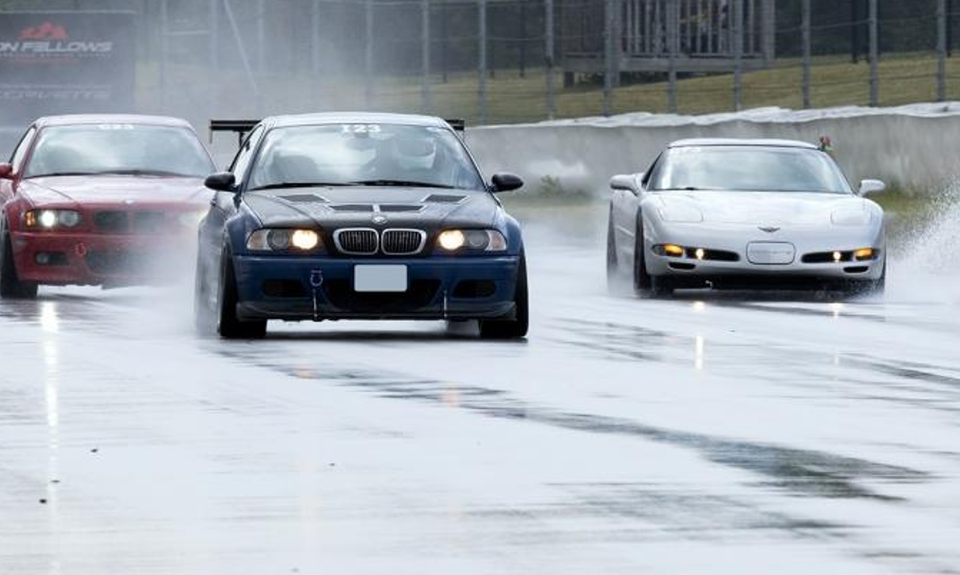
Our BMWs are quite impressive at turning, too. It's part of why they're called "The Ultimate Driving Machine". But tires have lateral limits, too. When our tires exceed their limits and lose traction in a direction that isn't entirely straight, either in a turn or just because the road is uneven, they may no longer keep us moving in the direction our wheels are pointing. We call this either oversteer or understeer, depending on which tires lose grip first. Understeer (the front tires losing grip first) has been designed into cars for many years due to it being a condition more easily recovered by the average driver. But oversteer is still possible, too.
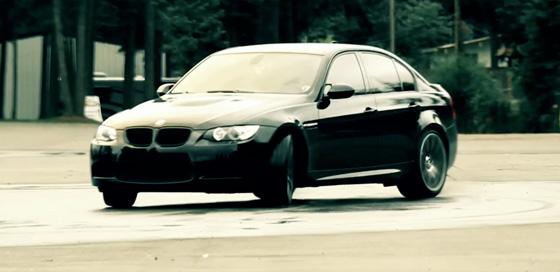
The interesting thing with uneven loss of grip is we often still have grip, just not everywhere we want it. A skilled enough driver may be able to take advantage of this grip with a combination of throttle modulation, counter-steering, weight transfer, and other advanced skills to manage the slide and keep control. We see this in rally and drifting. But this takes a lot of skill and experience, and even the pros aren't nearly perfect at it. (Stunt drivers wreck a lot of cars filming movies just to get those perfect drifting shots.)
Luckily for us non-pros, Stability Control (SC) takes advantage of this grip better than we ever could with approaches like braking with only a wheel that has grip. Again, these systems can't defy the laws of physics, so they can't save us from everything. But they do their best to keep us pointed closer to the direction we intend despite grip challenges. And they do so better and easier than we ever could without them.
BMW includes Stability Control in the Dynamic Stability Control (DSC) system in our cars, too.
Awareness and reactions
Beyond maintaining traction, driver attention and reactions are one of the biggest challenges in modern driving. There's a lot manufacturers like BMW have done more recently to help improve these.
For example, in most BMWs, if you jump off the accelerator pedal and onto the brake pedal quickly, in the transition time, your brake calipers are pre-tensioning and maxing their boost so that the pedal and brake calipers react more quickly. And further, in the latest BMW models, if they detect hard braking as part of this, they'll also tighten the front seat belts, roll the windows most of the way up, and lean the passenger seat into a safer position for a potential impending crash.
There's also Driver Assistance systems, which are optional equipment on a lot of newer cars, like Forward Collision Mitigation, Blind-spot Monitor, Driver Attention Monitor, and more. These systems cannot prevent all problems, but they help increase driver awareness, help drivers react faster and better, and they can help minimize damage if a collision does occur. For example Forward Collision Mitigation uses the key word "mitigation", meaning it lessens a crash, but cannot always prevent one at higher speed.
Making it all work
While all these systems are very good, it's up to us to properly upgrade and maintain the most important safety system in our cars: the driver.
Whether it's our awareness keeping us out of potentially bad situations with defensive driving, or our car control skills getting us out of the few bad situations we couldn't predict, we are the ones ultimately responsible for our vehicles. All these electronic safety systems are great, but they just support the driver. Even cars with "Full Self Driving" don't truly drive for us, they always require driver attention and potential intervention. (Only truly autonomous vehicles like Waymos don't require a driver, which lack a steering wheel and pedals as a result. But we're driving enthusiasts, so we don't talk about those.)
We can always be practicing and improving our skills as drivers by constantly focusing on our awareness and training our mind on how to respond. This is discussed in more depth in my previous article here.
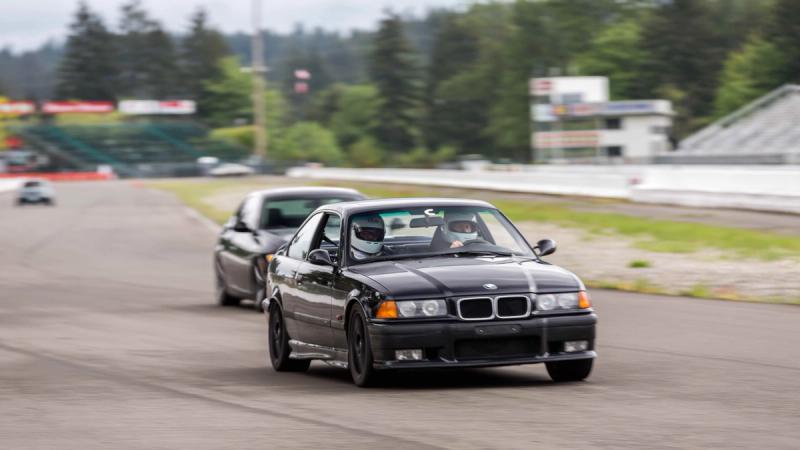
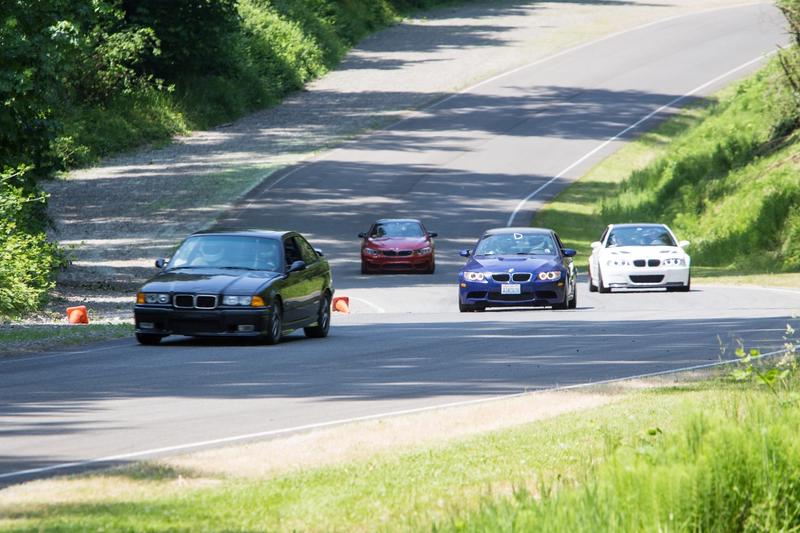
We can also keep practicing our car control skills at Car Control Clinics and High-Performance Drivers Education events our local club chapter puts on regularly, where we can hone our abilities hands-on in the safety of a closed, controlled course with the help of experienced instructors. Better to practice these skills and get more familiar with our cars with nothing dangerous to hit rather than waiting until we really need them on public roads. Hitting a cone doesn't result in anything more than a bit of bruising to our ego, whereas needing these skills for the first time on public roads has the potential for much higher consequences.