Thinking Fast and Slow




Our brains are very impressive biological machines. They're capable of performing multiple complex tasks at the same time, with a major caveat: our brains are actually poor at consciously paying attention to multiple complex tasks at the same time. They have limited bandwidth, because conscious thinking is slow, energy intensive, and complex. Give someone too many things to pay attention to at once and they will rapidly get overwhelmed.
Luckily, our brains like to learn to be efficient. They constantly work to minimize the active thinking effort needed for repetitive tasks and skills by building up lower effort heuristics, or mental shortcuts, to make conscious attention unnecessary. But this second brain mode comes with a downside: without deliberately maintaining conscious awareness, those shortcuts can lead to systematic errors in how we apply this more efficient thinking, leading to mistakes if the situation differs too far from the simplistic model our brain has created. The efficient side of our brain is often too simple to recognize, let alone correct, these mistakes.
There are more clinical ways to refer to these two modes of thinking, but I simply refer to these as our "subconscious skills" and "conscious thinking", as they're easier terms to keep straight.
Why am I talking about brains in an article about driving? Because driving is a skill and understanding how our brains execute that skill is key in improving that skill.
Subconscious Skill
Remember when you first started learning to drive? Or maybe when you first started teaching someone new to driving? What did it feel like? For most new drivers, it starts a bit all over the place, constantly overcorrecting to try to stay in the lane, and struggling to pay attention to the many different things they need to pay attention to like signs and mirrors. It can feel exhausting. But eventually it became second nature.
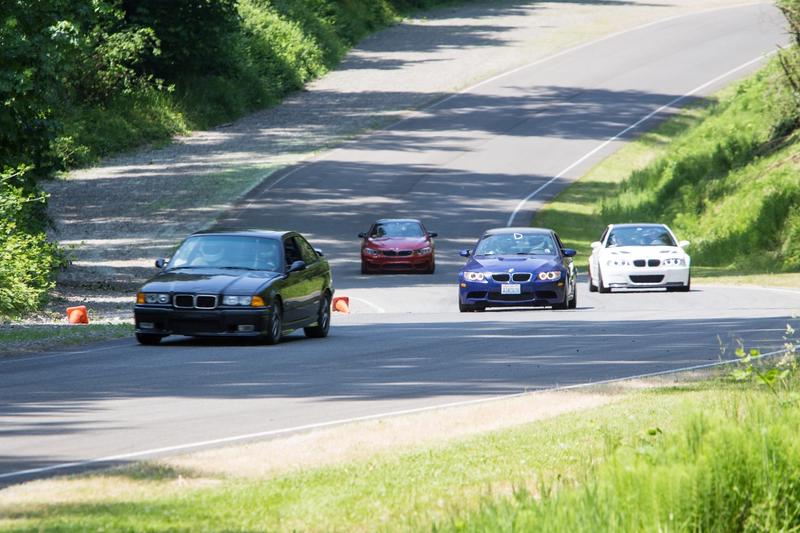
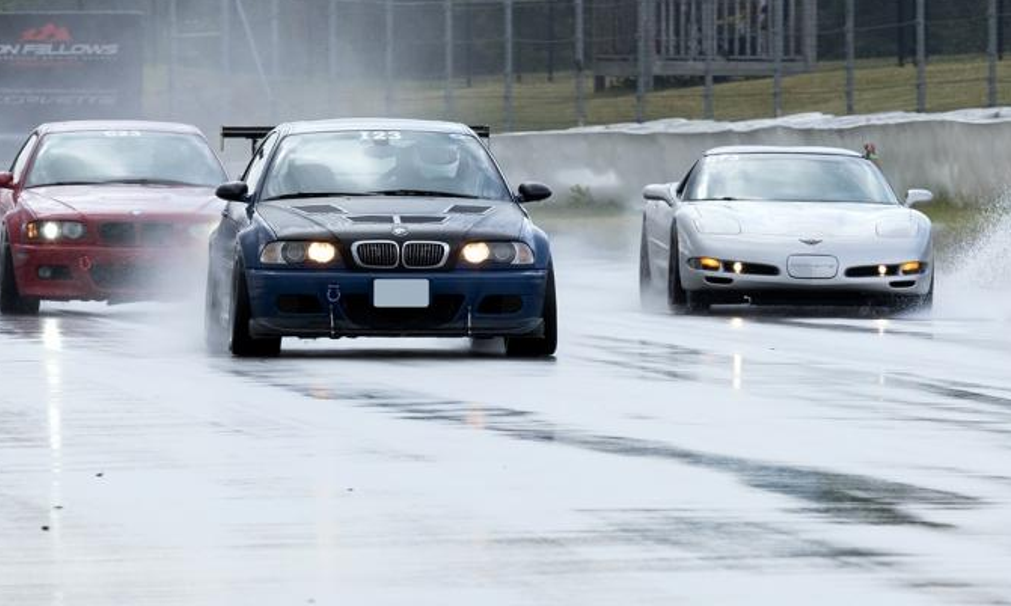
What about your first time driving on a racetrack, for those of you who have tried it? New track drivers know how to drive a car on the road, yet they're often rougher and more reactive with the controls; not as precise staying on the line and hitting apexes; take many laps to correct small mistakes; and miss a lot of details they need to notice, like flags and cars coming up behind them.
Have you ever watched a baby learn to walk? They're clumsy, slow, make a lot of mistakes, and seem to be focusing a lot on their walking rather than much else around them. Learning to drive on the track can feel like that!
These are all examples of trying to execute skills solely with one's conscious thinking.
Conscious thinking is smart, and capable of learning and exploring new skills. But it is also relatively slow, hence the sloppiness and late execution, and overreacting to mistakes while executing those skills early on. That mental slowness also limits how many things our conscious thinking can juggle at once without getting overwhelmed. How do we transition an appropriate amount of our driving skill to the “fast” side of our brain?
Freeing Our Minds
Luckily, none of these skills require continuous conscious focus for long. With practice, they soon become second nature: subconscious skills built from experience. Our conscious mind starts simply triggering these subconscious skills rather than having to focus on executing those skills.
Our subconscious skills are relatively simple and lazy, they can only be learned from very direct experience and take in very direct input such as what our eyes are directly looking at. But our subconscious skills are very fast, hence why all of these skills smooth out so much as we get good at them.
We're much more capable of multitasking using subconscious skills because of how fast and simple they are. Ever try rubbing your stomach and patting your head at the same time? You probably stumble for a second or two, but then you quickly get into the motions and do both at the same time easily. That's your conscious mind briefly figuring out how to trigger the right subconscious "skills" at the same time, then those subconscious skills taking over and you can do both at once easily.
This is great for basic driving, too, because many of our more basic driving skills have become subconscious, freeing our conscious thinking to focus more on other things. That might be looking at traffic further ahead, thinking about our route, or singing along to music. We don't need to concern our conscious thinking with executing simple tasks like how to stay in our lanes or how to maintain a constant speed. On track, as we build experience, the same thing happens: we start thinking more about the next corner than the current one, as well as other signals and cars around us. Professional racing drivers do so much subconsciously that they're often consciously thinking about traffic on the opposite side of the track or how they'll be driving three laps from now.
Falling Short
But remember what I said about our subconscious skills being relatively simple? Subconscious skills execute tasks already learned, following lazy heuristics, whether they're right or not for the current context. It's not thinking things through or seeing the bigger picture like our conscious thinking can, it's too fast for that.
Which is why it's important to always remain consciously engaged, even when the skill has become subconscious. We trust our subconscious to execute the skill, but we need to keep our attention to supervise and orchestrate because simply executing is not enough.
Awareness
Our subconscious skills have limited awareness. But awareness is critical in safe driving.
Have you ever seen a driver making slightly jerky and reactive movements to stay in their lane? There's a good chance that driver was looking at their phone intermittently.
The subconscious skills part of our mind can't picture the road ahead like our conscious thinking can. It simply sees what our eyes see, which isn't the road if we're not looking at it at the moment. Sometimes it even “fills in” gaps that might not match the current reality! It's up to our conscious thinking to keep our eyes on the road to feed that direct input to our subconscious. And if we don't, our subconscious mind quickly falls behind.
If you've ever attended a high performance driving event, you probably remember your instructors emphasizing "vision". This is exactly what they were talking about. Our subconscious skills are good for driving normally, but when less normal things happen, it distracts our conscious thinking from keeping our eyes in the right place, which then ruins our subconscious skills' ability to drive well.
This applies on the road as well. Drivers who treat driving like an obstacle rather than a job, and thus let themselves be distracted by everything else they'd rather be doing, don't maintain conscious awareness. They get complacent, relying primarily on the subconscious skills' shortcuts, even though that's prone to errors at times when unsupervised. Driving requires both types of thinking working together.
It often seems fine to keep focusing less when nothing seems to have gone wrong doing it before, until that one unexpected moment where we realize too late we've become too complacent.
Learning
This is why we need to practice deliberately.
Our subconscious skills are bad at learning from errors without conscious awareness. They're too simple and fast to do it alone.
We have to deliberately practice keeping the two working in sync, each doing the right jobs at all times to help each other, especially in less common or less comfortable situations, including our everyday driving where we're prone to get complacent and focus less.
And we have to practice new skills and new situations so that they can become subconscious skills, rather than trying to badly execute them the first time when we really need them with our conscious thinking only.
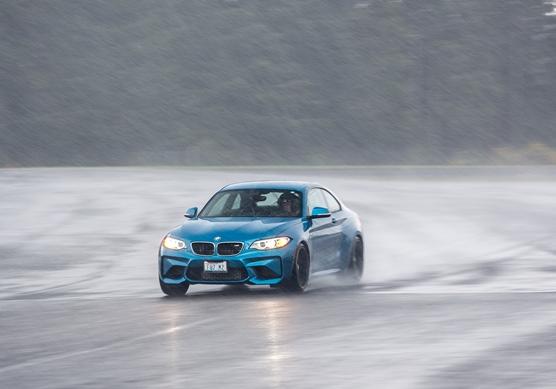
As an example, the first time a driver experiences their car losing traction and sliding, two things typically happen:
- They may react by consciously thinking something like "steer into the slide". But their conscious thinking is slow, so by the time it processes what that actually means and how to do it, it's too late.
- Their vision drops because they're overwhelmed. This takes away any chance of their subconscious skills being able to keep up, even with its limited experience in this situation.
This often leads to a loss of control, or a spin.
But I've helped enough drivers at our Car Control Clinics with exactly this skill to tell you this gets better quickly with practice. Your vision gets better, and your subconscious learns to handle situations like this better. Though it will still always require conscious coordination.
Practice
So how do we put this into practice?
There are a few key observations to take away here:
Always stay aware. Your conscious attention is critical in driving at all times, whether on the road or the track, even when it feels like it isn't. Because it's seeing the bigger picture, it's keeping the right information flowing to your subconscious, and it's ensuring you aren't missing opportunities to improve your subconscious skills.
Always be learning. When someone honks at you, don't just react with a retort without consciously thinking it through. It may have been their fault, but there's likely something you can learn from that interaction about how to stay out of the way of those types of drivers in the future. You know they're not using it as a learning opportunity, so if you're not learning from it, your subconscious skills will just drive you into a similar situation again without considering it.
Always stay focused. Your subconscious skills can only use what you give them. Keep all your senses on the road, not your phone. And keep them ahead and around, to give it as much early input as possible.
And practice good skills with your conscious thinking and gain the hands-on experience you need to maintain and improve your subconscious skills. (Check out our club's advanced drivers education programs for great opportunities to practice hands-on on closed courses with instructors that ride with you to help with this type of practice.)
Between opportunities for hands-on practice, try visualization. When you visualize what all your senses would be experiencing, not just what you'd see, your subconscious learns just as well as from the real thing. So much so that most pro athletes spend a large portion of their time practicing this way, too. This is particularly useful in skills like track driving where you'll never get as much hands-on time as you want: visualize driving tracks you know every night laying in bed before you fall asleep as a way to practice. Visualization works in any skill that involves your subconscious once you know what it feels like to experience it.
Conclusion
Ultimately, driving is a skill, whether on the road or the track. And like all skills, it requires practice. But not just any practice, it requires regular, attentive, deliberate, conscious practice to maintain, correct, and improve the subconscious skills and keep the conscious focus needed to orchestrate them effectively. Don't become a complacent driver, use every driving opportunity to keep getting better. Better for your safety and those around you. And better for your enjoyment. Don't let your ultimate driving machine go unappreciated with complacency and inattention.